Today is September 22. The postgraduate recommendation process has not fully settled yet, but the National Scholarship review is already approaching. This year, I am lucky enough to stand in front of everyone. I am not doing it to prove myself. I just want to say out loud the bitterness, sweetness, warmth, and coldness that have been buried in my heart over these three years. I have waited for a day like this for far too long.
After going through certain things, I slowly came to love the song Sunlight in the Cracks. It is a beautiful song, an encouraging song, and more importantly, a song that echoes something in me. So I will use its lyrics as a starting point, look back on the past, and listen again to the rhythm of this life.
First Year: Dreams That Emptied Out Before They Began
In September 2021, I came to my dream university, Nanjing University, with the highest score from my high school. Back in high school, I had already developed an interest in brain science, especially brain-computer interfaces. I wanted to understand consciousness, emotion, and memory, and I imagined the kinds of scenes that appear in science fiction: the human brain interacting directly with machines, or even thoughts being uploaded into a machine. My first-choice major was therefore the newly opened “Brain Science and Artificial Intelligence” program at Kuang Yaming Honors School.
But my Gaokao score was not high enough. As someone with color blindness and color weakness, I was assigned instead to Chemistry and Life Sciences. During repeated experiments where I had to start over because I had added too much titration reagent, I became lost. Where was the future? Where was the dream? Never mind the dream of doing research. I could not even figure out where I would work after graduation. If I went to a chemical plant in this state, it might genuinely be dangerous.
Fine, then I would transfer majors. If I was interested in the field and direction, and could not yet study the “brain,” I could at least study the “computer” first. Unlike the School of Artificial Intelligence, if I failed to transfer in freshman year, I could still try again as a sophomore. And if research did not work out, the employment prospects would still be decent. So the Department of Computer Science, now the School of Computer Science, became my target.
Could I not get into the prerequisite courses for transfer? Then I would stay up watching the course-selection system. In sophomore year, I even wrote a course-grabbing script for this, only for the course to be assigned to me in the first round that time. Did computer science classes conflict with chemistry labs, the kind that took an entire day? Then I would apply for exemption from the CS class and study it after class on my own. Was the transfer exam hard? Then I would give up almost every optional student-work role, club activity, and elective, and spend nearly all my time self-studying discrete mathematics and practicing OJ problems.

That was how I rushed through freshman year. The effort did let me see a faint light from the future and the dream again. I ranked 5/119 in my original major during freshman year. In Programming Fundamentals, I was the first to finish every assignment. At the end of the semester, I received Professor Liu Qizhi’s prize with the highest “points,” along with his encouragement: “Wish you a smooth transfer.” Before the exam, I cheered myself on: keep going, trust your effort. Once I passed this hurdle, everything could return to the direction I had hoped for.
Then came the transfer exam in early June 2022. It rained heavily the day before. A storm seemed about to arrive. That night was the second sleepless night of my life. The exam ran from written test to programming test, from morning to evening. In the programming test, 3.5 hours and 300 points, I got 30. The problem was an algorithm template problem usually learned in sophomore year: knapsack in dynamic programming. I had not self-studied that far. There was still an interview the next day, but when I returned to the dorm, I could not stop crying. I hated it. For the sake of the dream, I had clearly made so many sacrifices and paid so much. How could the result still be like this?
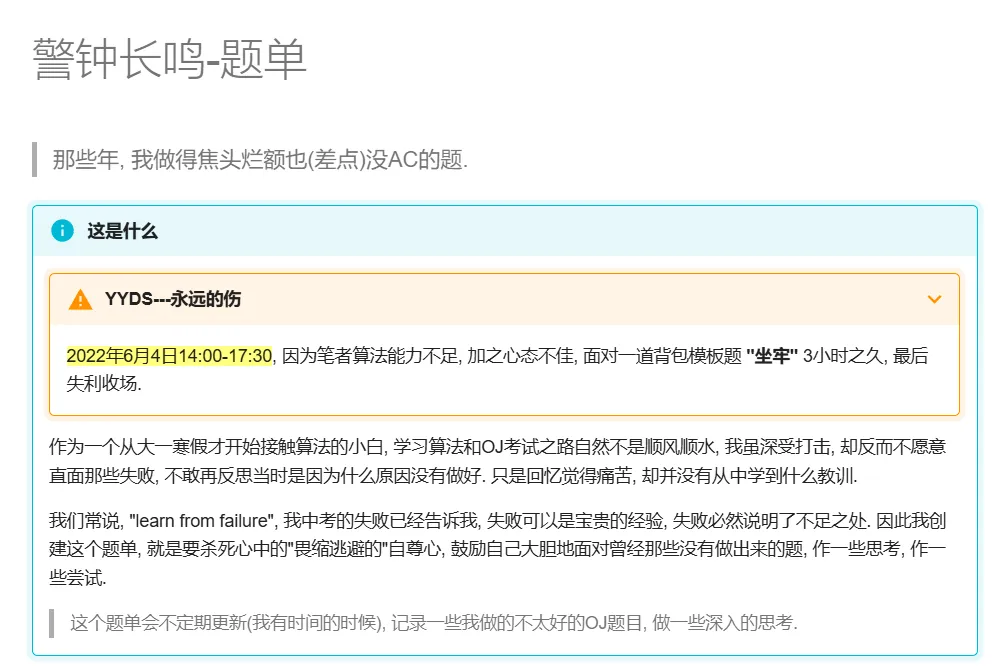
Forty-seven freshmen took the transfer exam, and twenty were admitted. I was not one of them. After that exam, a belief I had always held was broken: effort really does not necessarily bring reward. That summer, even though my home was in Nanjing, I did not go back. I spent my nineteenth birthday alone in the dorm, thinking that the dreams I had written down at eighteen had all become bubbles.
Second Year: Waiting for a New Day After the Night Turns Over
I entered sophomore year in a daze. The “comrades” around me who had transferred majors had all begun new academic lives. When I met them on the road, I almost did not dare face them, like a wolf with its tail tucked. The only thing that gave me any hope at the time was the scholarship review. At least my grades in my original major were still decent. Surely my freshman-year effort had brought some return. Then my counselor told me that because I had postponed the C Programming Fundamentals course offered for the School of Chemistry, I could not be considered for any scholarship at all, not even the People’s Scholarship based purely on grade ranking. At the end of our QQ chat, he left me with a sentence that broke through my defenses again: “There is a price to transferring majors. Otherwise, if you got every benefit, what would students who seriously study their own major think?” He was not wrong. I can only blame myself for being too thin-skinned and too sensitive at the time.
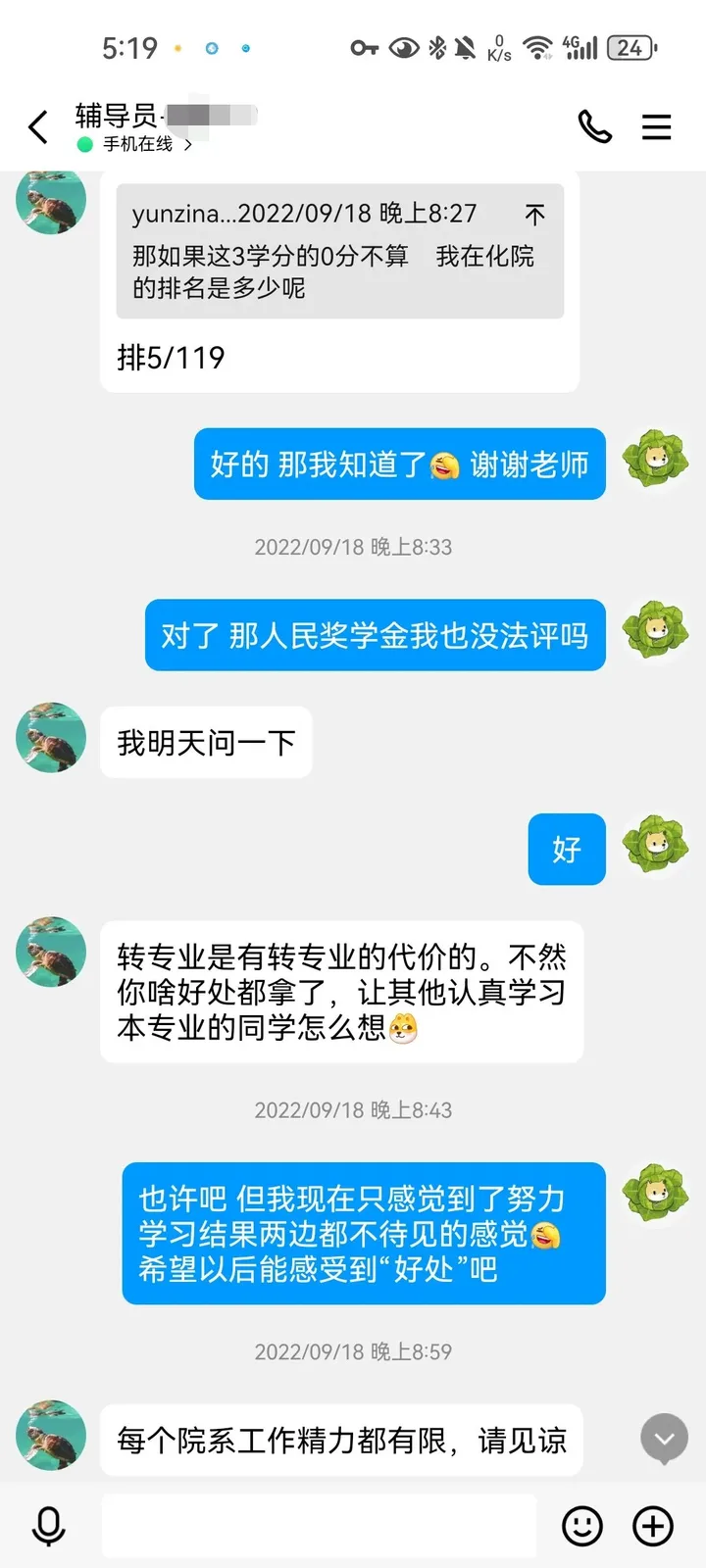
Provoked by this incident, I made up my mind: if I was going to do it, I would go all the way. Even if failing again would be painful, and might even make graduating on time a problem, I would burn the boats. If I could not do what I truly wanted to do, what would be the point?
After listening to several seniors’ advice, I decided to postpone most of the theoretical courses in my original major and spend more time studying computer science. I continued sitting in CS classrooms as an “outsider.” Over that year, my understanding of computer science gradually opened up. Sustained effort also made each professional course feel more manageable. The algorithm knowledge I had swallowed whole during freshman-year self-study finally became clear. Although my anxiety about my major and future was even stronger than it had been a year earlier, I felt more and more confident because that confidence now came from actual ability. I believed that once the night turned over, there would be a new day.
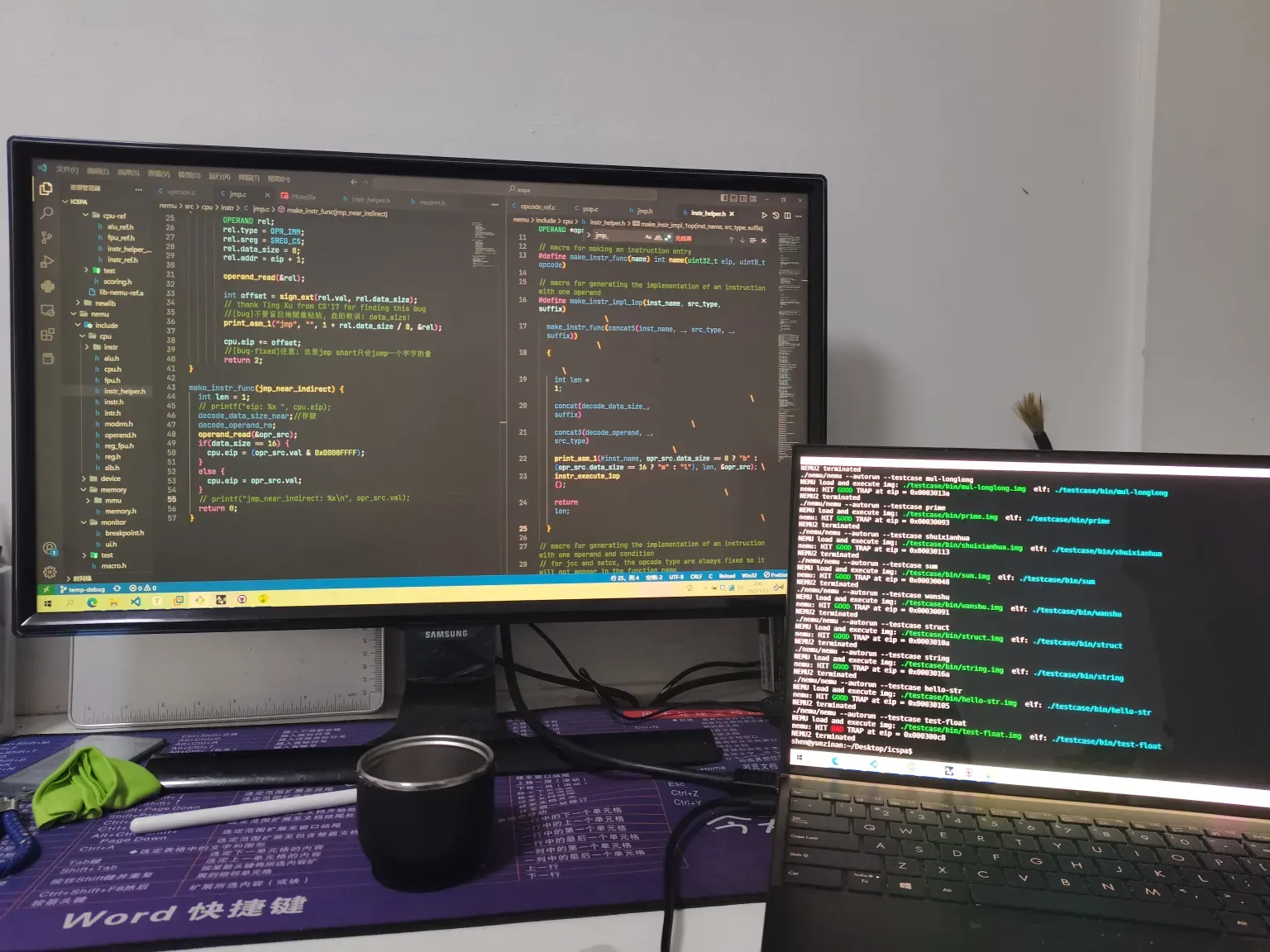
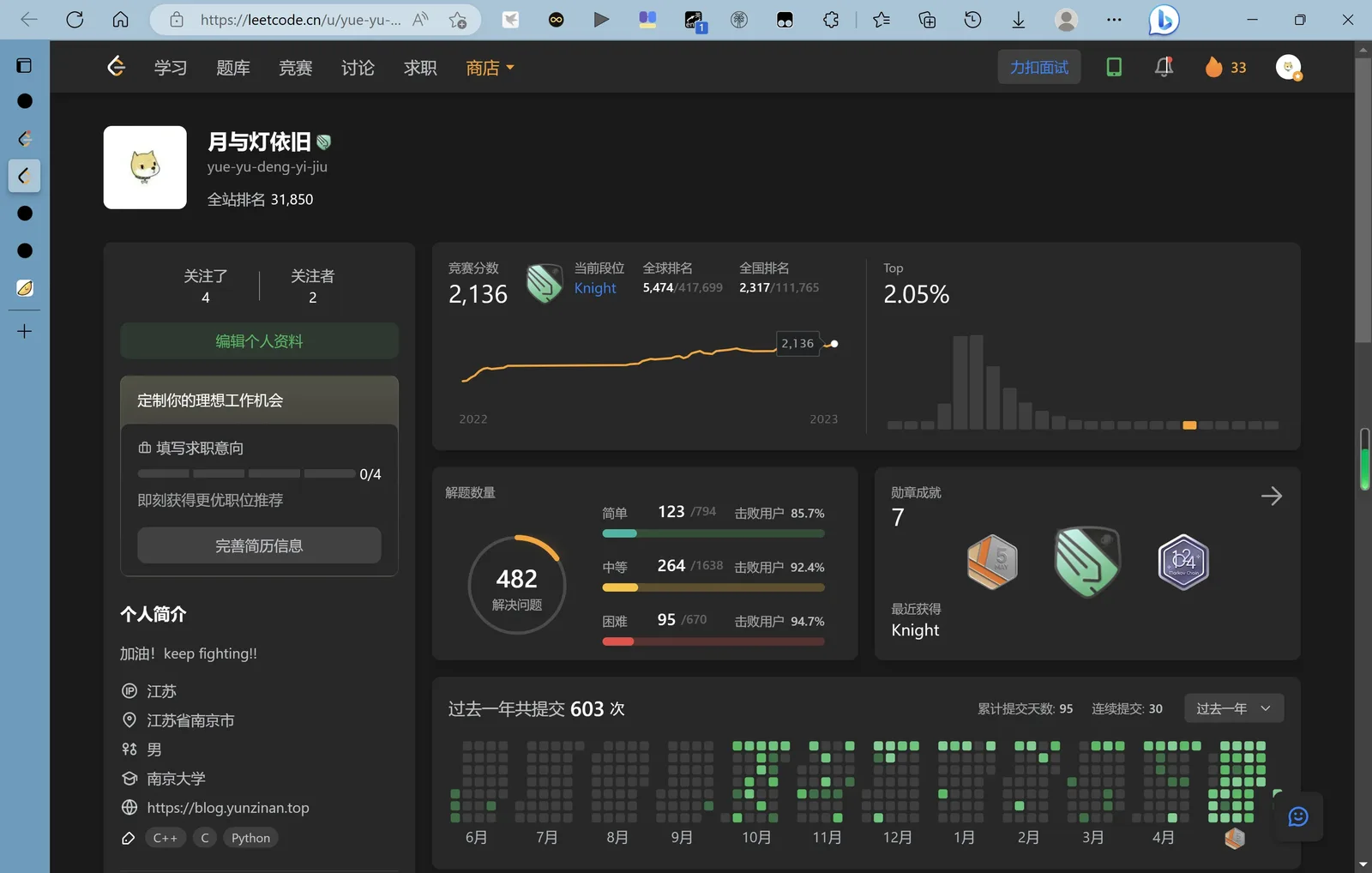
Just as Senior Su, who had transferred from the School of Chemistry to the Department of Computer Science two years earlier, once said: “With absolute strength, seize fate by the throat.” This time, I succeeded.
Third Year: Breaking Open the Cracks in Life
For most students, junior year is already a year of harvest, or a year when they begin to lie flat and take things easier. For me, having just transferred into computer science, there was no time to savor the joy of success. Reality was simply a mess. When outstanding classmates had already joined labs and started research, I still had several core professional courses from freshman and sophomore year that I had not even taken. Volunteer service? Innovation projects? These were things that appeared on other people’s defense slides, and in the past I had not even dared to hope for them.
“Catch up with everything I have” became the keyword of my junior year.
For coursework, while taking the normal junior-year core courses, I also had to make up three missing professional courses: Operating Systems, Computer Networks, and Probability Theory and Mathematical Statistics. All of them were hard courses. But that was fine. I just needed to put in more work. In the end, I achieved the result that every computer science professional course was above 90, and the lowest professional-course score counted for recommendation was 93. My full-year GPA ranking went from 47/209 in the sophomore year when I transferred in to 3/209 in junior year. My recommendation ranking was also 3/209.
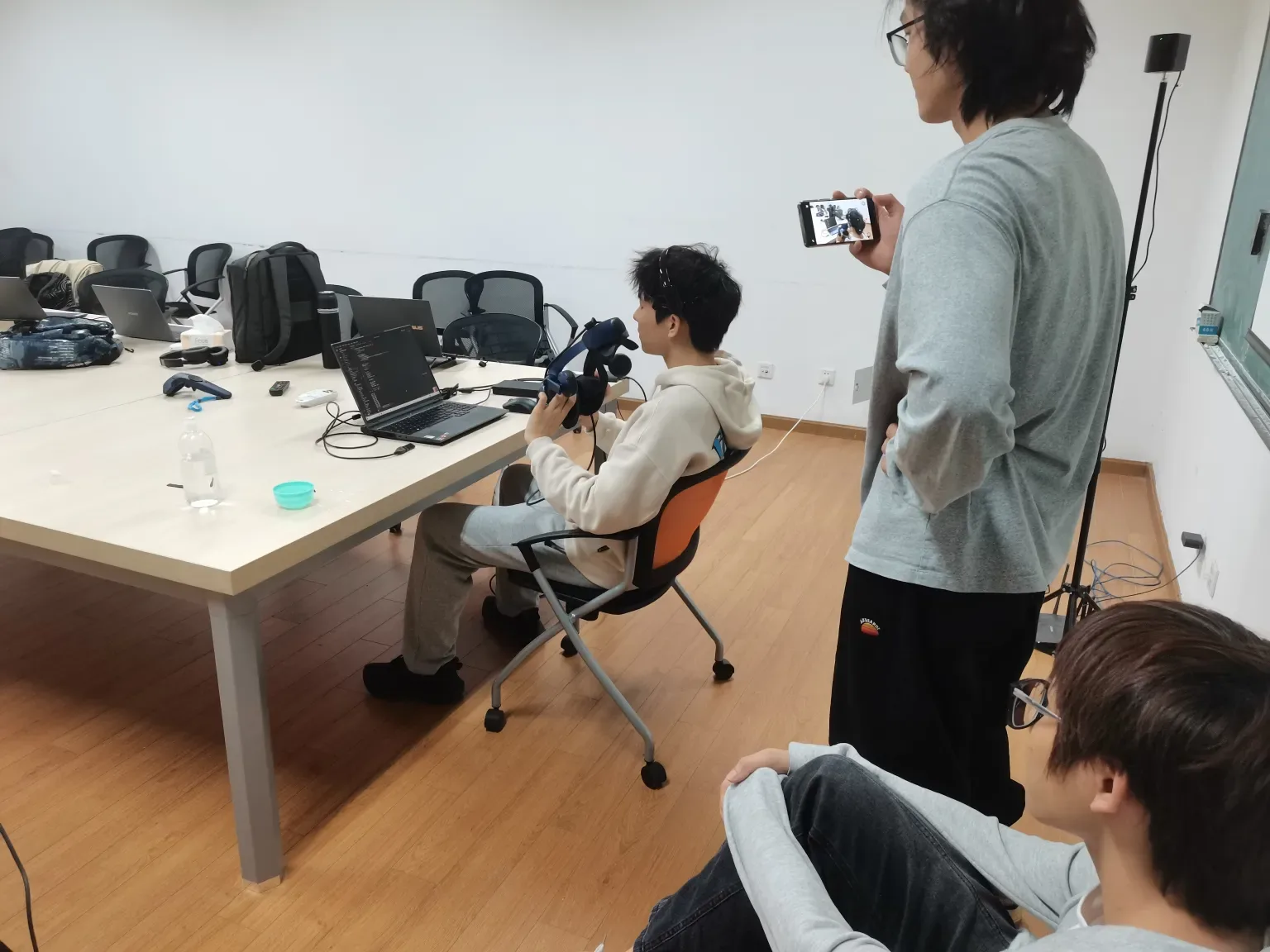
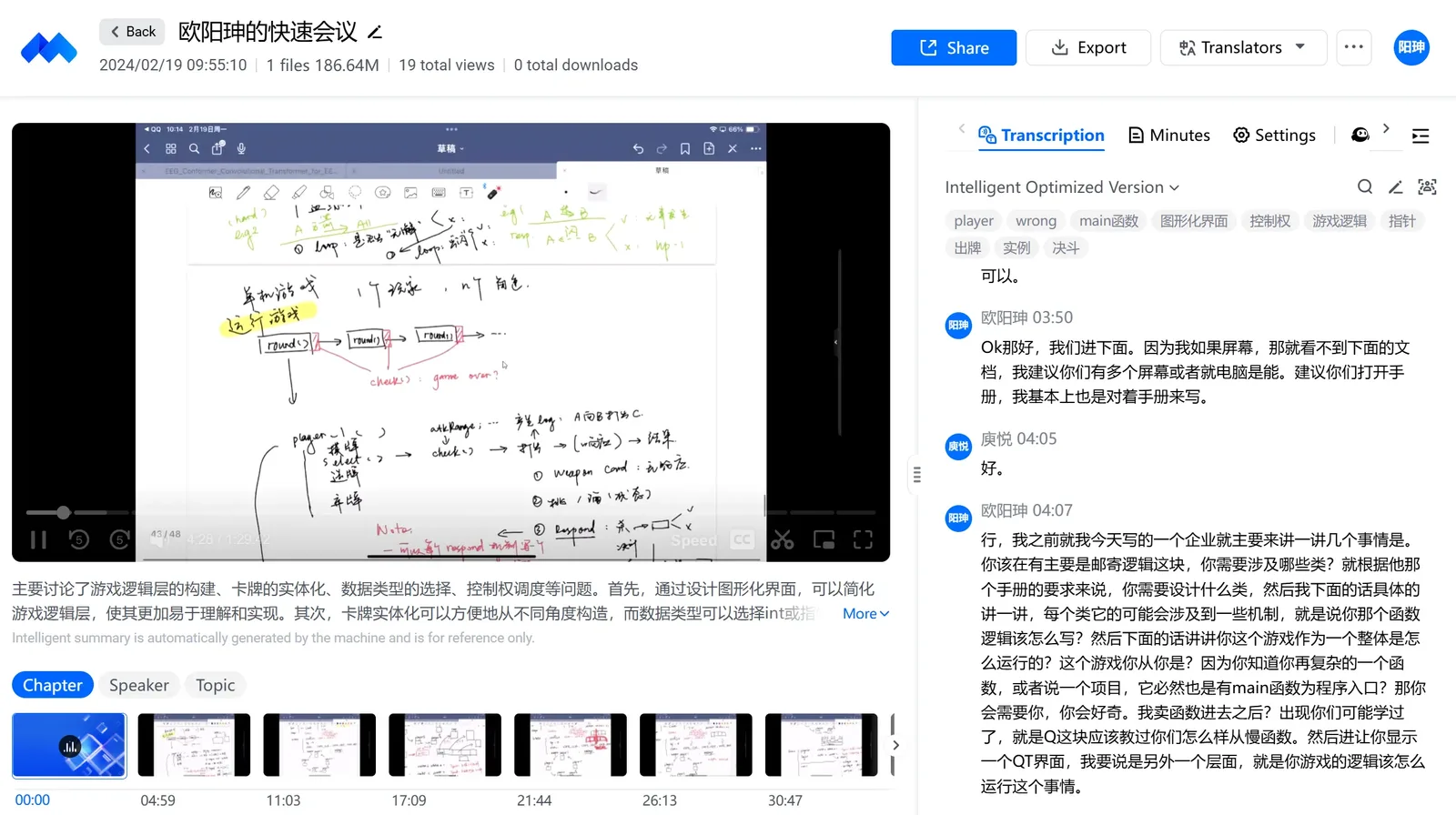
For research and innovation, I could finally work on something I truly cared about: brain-computer interfaces. I immediately contacted Professor Feng from the Software School and asked him to serve as my research-practice advisor. Starting that summer, I read papers and learned the basics of the BCI field. After the semester began, I initiated and led a college student innovation training project on using BCI to realize “mind-controlled movement” in VR. I invested a great deal of time and energy into this project. At the early stage, in order to recruit teammates, I even built a popular-science and promotional website for BCI. After the project was established, the four of us held meetings about once a week, including during winter vacation. Over more than half a year, we held 21 meetings and organized 69,000 Chinese characters of written material. We also invited a teacher from Shanghai Jiao Tong University who worked in this field to guide us. In the end, the project was approved at the national level, and we filed an application for a national invention patent.
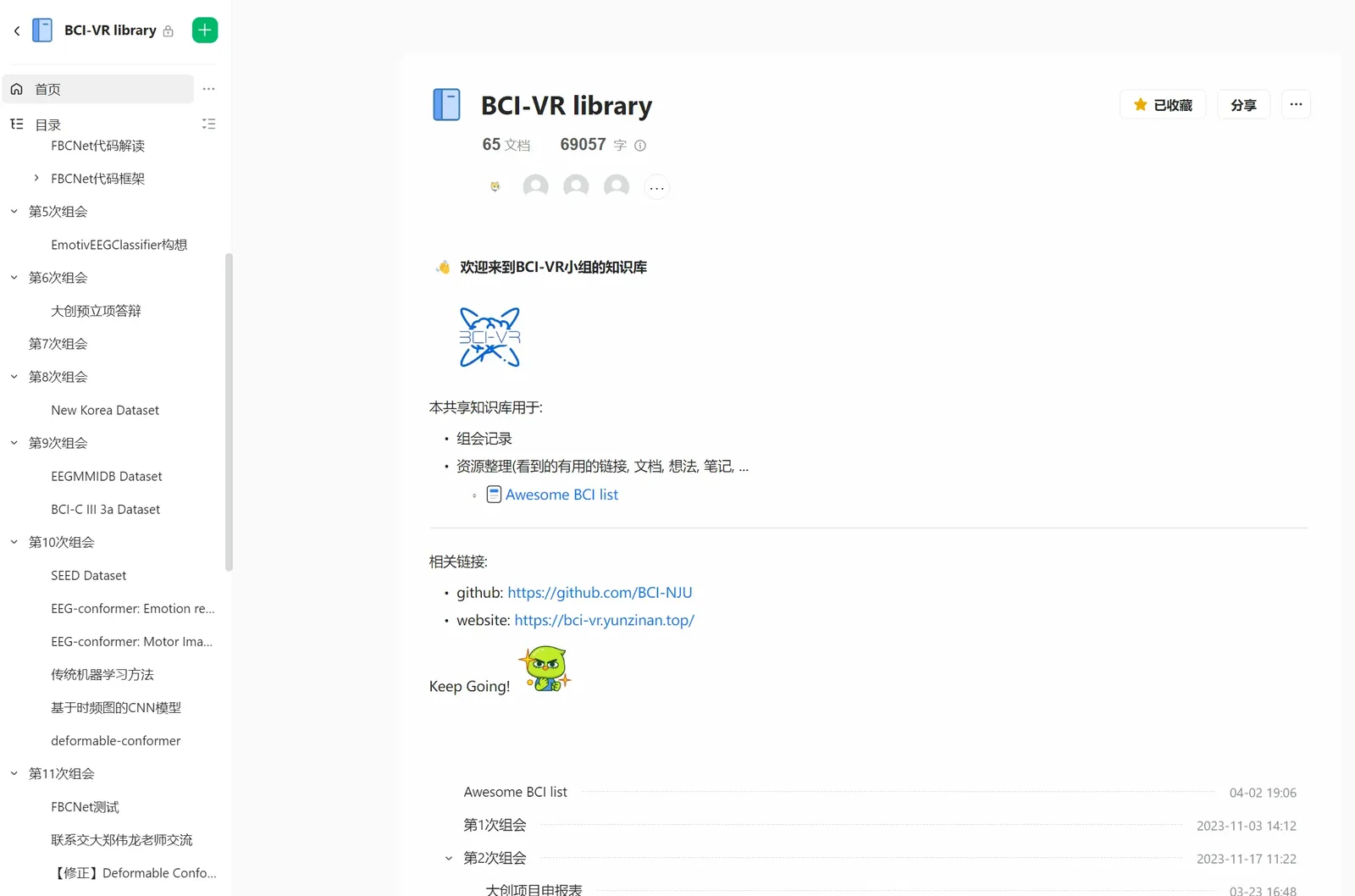
For volunteer service and student work, objectively speaking, I really could not spare much more time, so I did what I could during winter vacation. I participated in the “Nanxing Dream” program and was named an outstanding volunteer. In the Winter Code holiday programming contest, I supported freshmen as a volunteer and additionally gave two hours of online guidance on project design. Apart from activities tied directly to volunteer hours, I have always had the idea and habit of sharing knowledge. Since freshman year, I have maintained a personal blog where I share course notes and essays on topics that interest me. In the second semester of junior year, I also signed up to become a peer mentor for the class of 2024. Now that the recommendation process is nearing its end, I also plan to share the 188,000 Chinese characters of professional-course review notes, programming-exam experience, interview experience, and other materials I organized during this period with younger students.
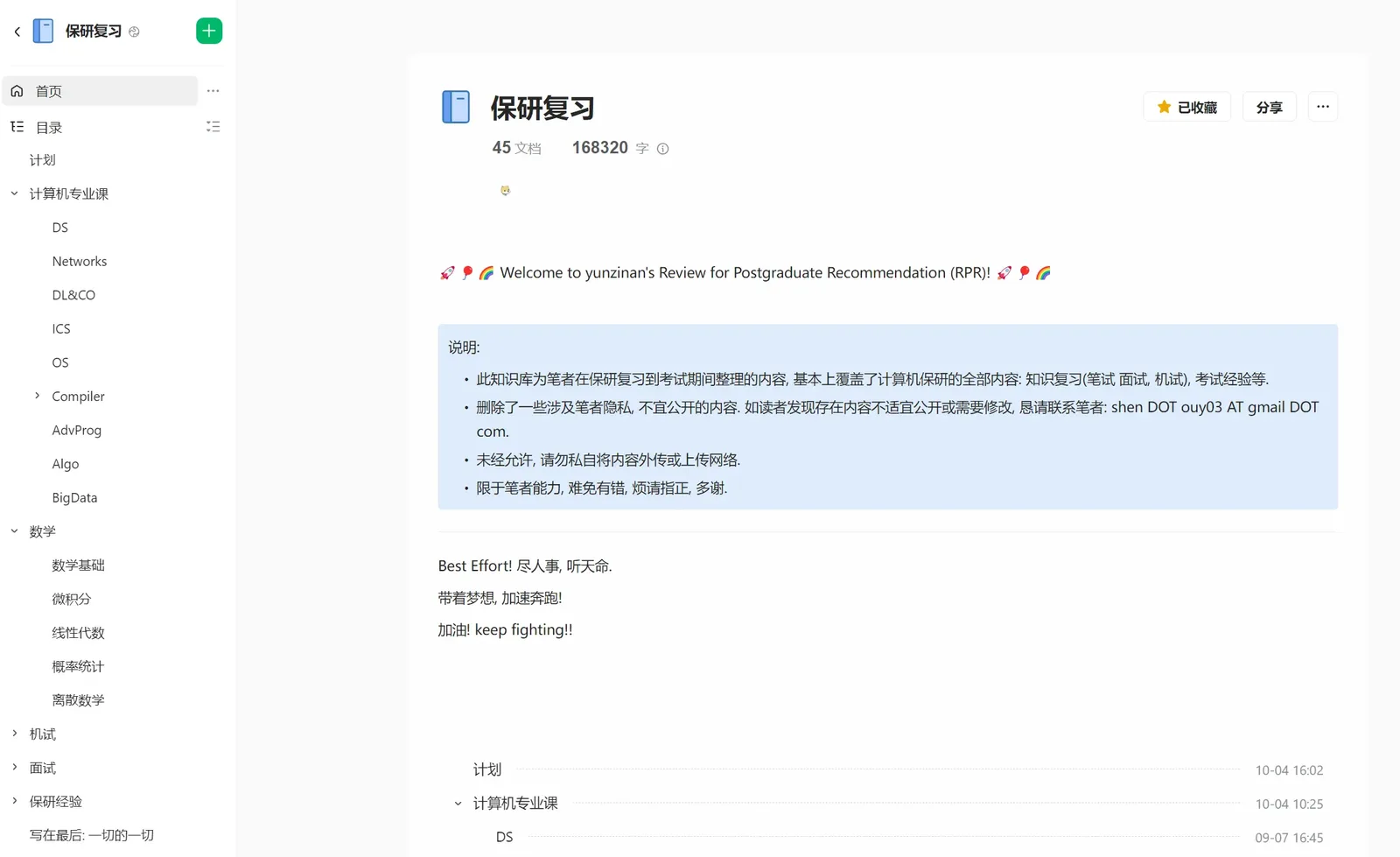
Writing to this point, these three years of college have already passed, and my undergraduate life is nearing its end. Looking back, it seems that almost nothing followed the route I had imagined. I also went through large setbacks and many ups and downs. But at the end of the road, I think I am still relieved. At least things have been moving in a better direction, and the cracks in life did not trap me. My undergraduate life was not perfect. Many “ifs” remained only “ifs.” But this is life, and because of it, I was able to experience a different kind of undergraduate journey. Congratulations to myself for making it through these three years of undergraduate struggle.
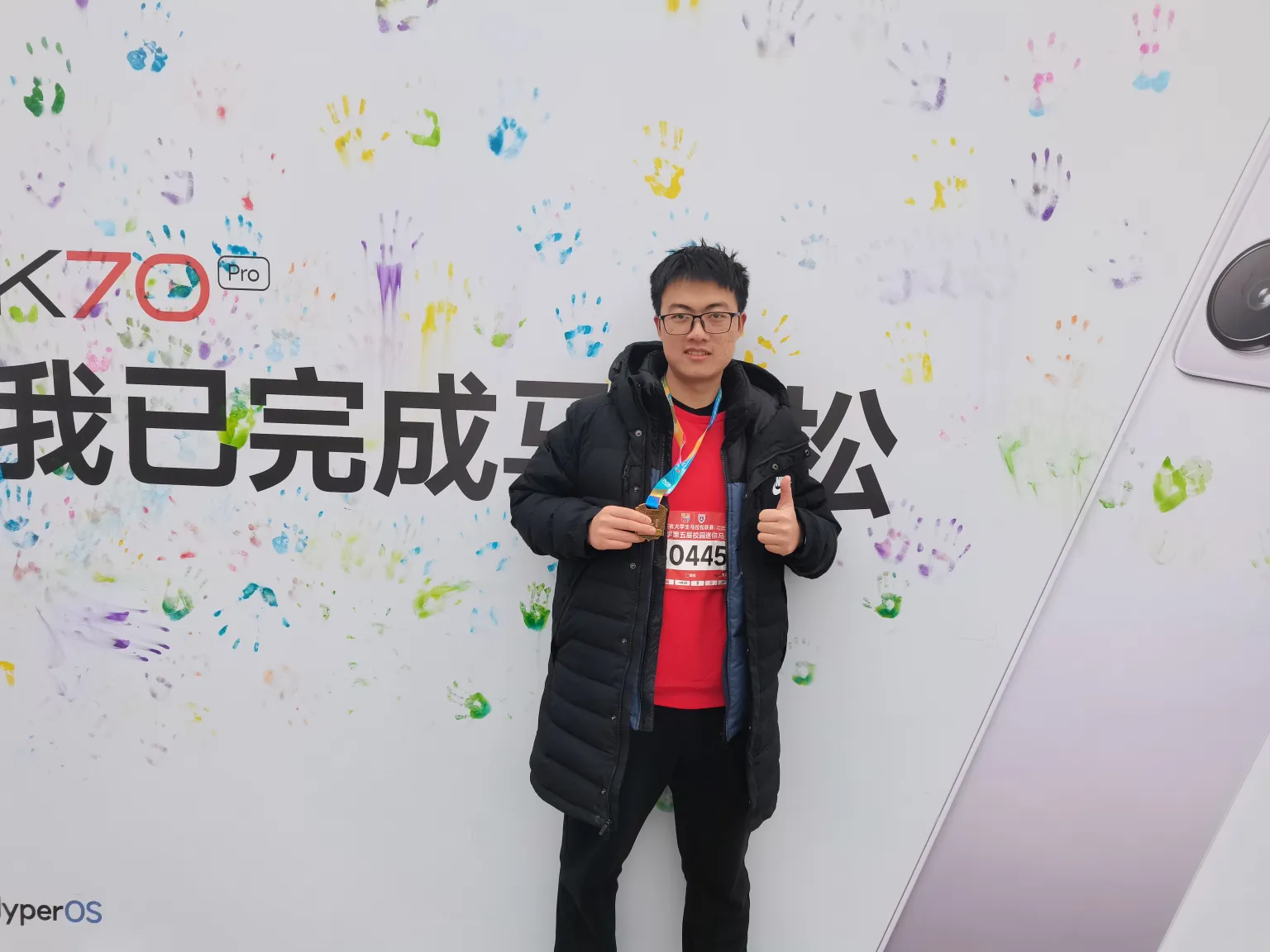
Let me end by returning to the song’s final image: if you dare to break open the cracks in life, sunlight will gradually pour in.